
Table of Contents
Introduction
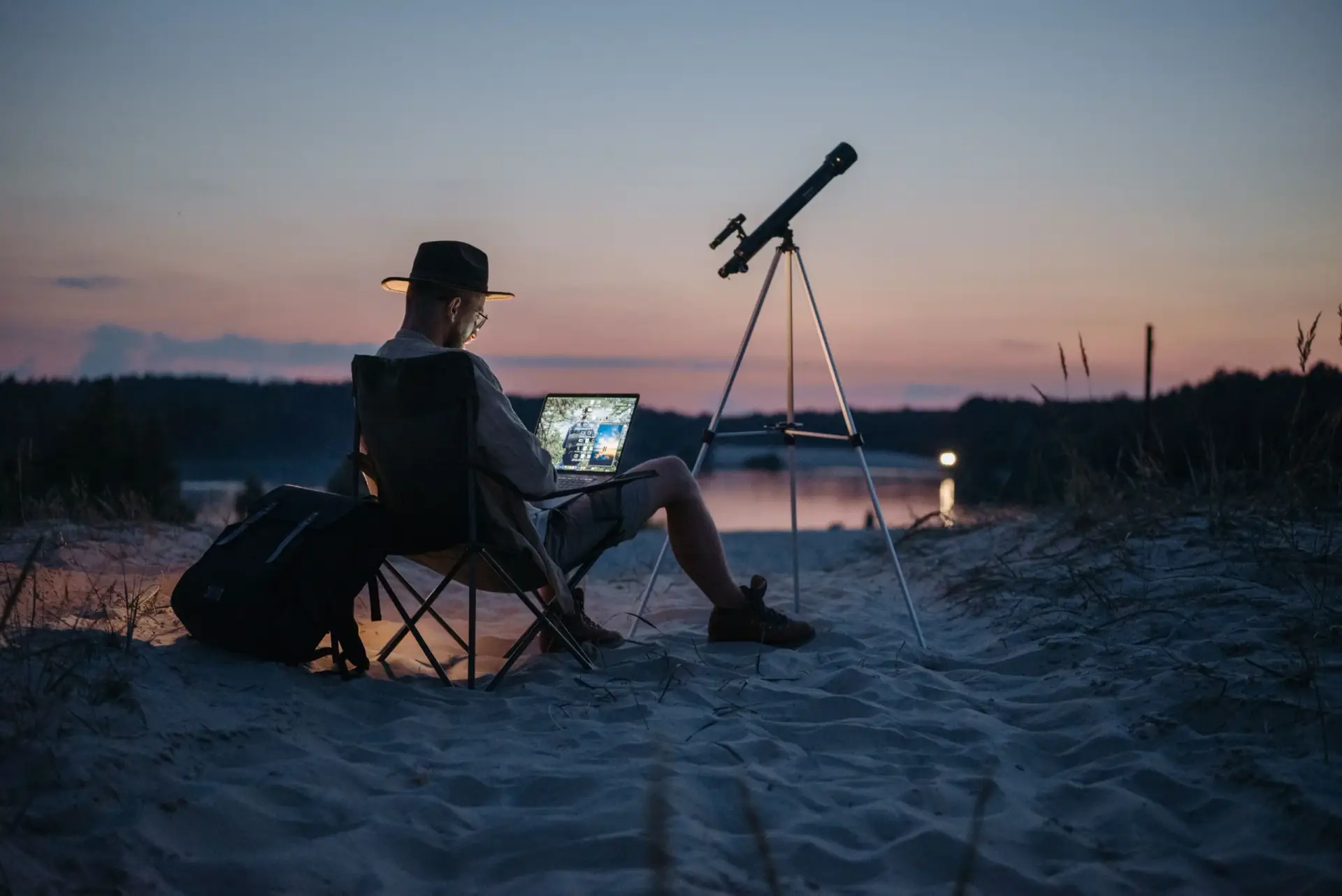
You’ve probably seen the photo: a laptop on a café table, a great view in the background and a caption about working from anywhere.
It looks appealing. But if you’re searching what is a digital nomad, you probably want to know what happens after the photo. How do people earn money? Do they travel all the time? And can you actually get work done with that view in front of you?
Here’s the simple answer: a digital nomad is someone who works remotely while moving between places. They might work for a company, freelance for clients or run an online business. Some change countries every few weeks. Others stay in one place for months before moving on.
It’s a way of living and working, not a job title. And the everyday version involves much more than booking flights.
What does a digital nomad do?
Most digital nomads do ordinary work that can be done online. They answer emails, join meetings, finish projects and meet deadlines. The difference is that their work does not require them to be in the same office every day.
For example, a web designer might build a client’s site while staying in another city. A writer might research and draft articles from a rented apartment. A remote employee might do their usual job from abroad, if their employer allows it.
The work still has to get done. A change of location does not turn a working Monday into a holiday.
Digital nomad vs remote worker: what’s the difference?
A remote worker can do their job away from an office. They might work from home and never travel.
A digital nomad also works remotely, but makes travel or changing location part of their lifestyle.
You can be one without being the other. If you work online from the same home all year, you’re a remote worker. If you take your work to different cities and continue earning while you move, you’re living more like a digital nomad.
There’s no rule saying you must cross a border to count. You could start by spending a month working from another city in your own country.
What is digital nomad life like on a normal day?
It depends on the person and the job. A freelancer may choose their own hours. An employee may still need to be online from nine to five in their team’s time zone.
A fairly normal day could look like this:
- Check messages and deal with urgent work in the morning.
- Spend several focused hours on client projects or regular job tasks.
- Take a walk or explore a nearby area during a break.
- Join an afternoon call.
- Finish work, then enjoy the place you’re staying.
Some days are less exciting. You may need to find a quiet spot for a meeting, sort out a payment or spend the evening catching up on work. You’re still living a normal life, just in a place you chose to spend time in.
That choice is the attraction. You might be able to stay close to family for a few weeks, escape a long commute or explore somewhere new after work. But you have to make room for both work and life.
What jobs can digital nomads do?
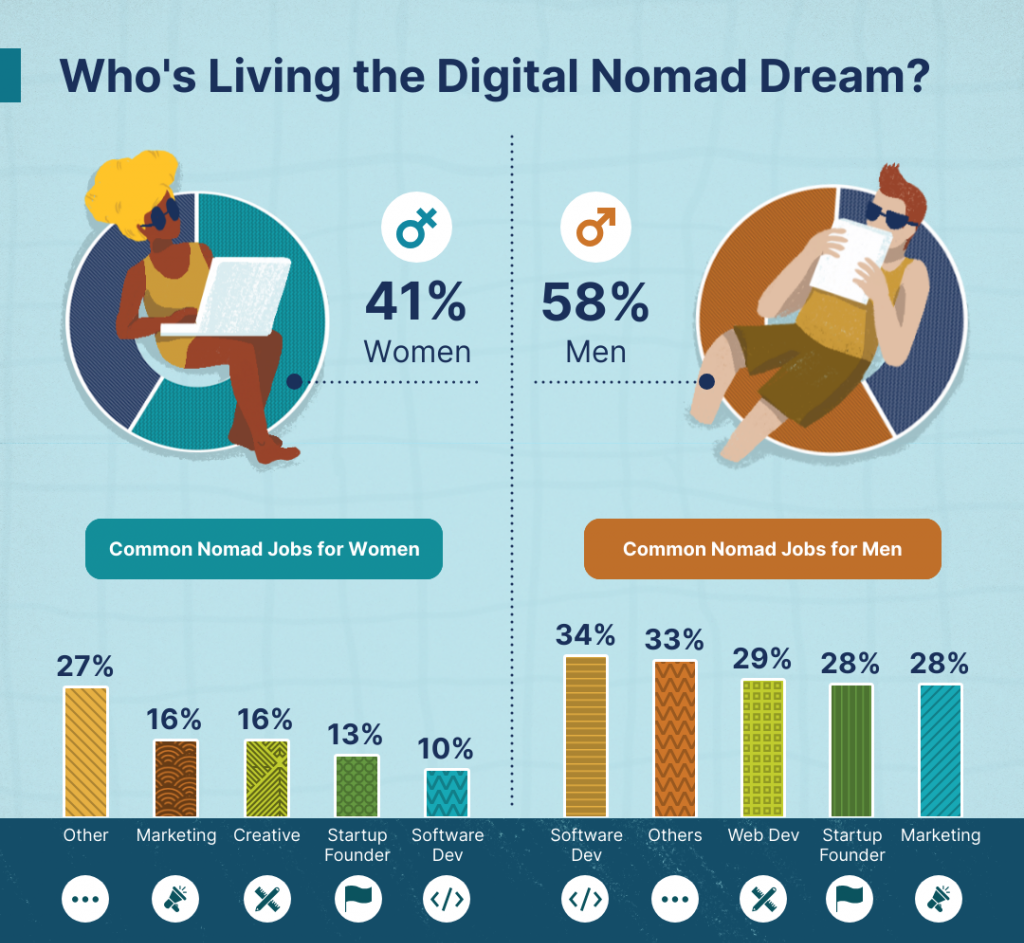
A digital nomad job is any job you can do online and are allowed to do from your chosen location. Common examples include:
- Writing, editing and content marketing
- Graphic and web design
- Software development
- SEO and digital marketing
- Online teaching or tutoring
- Customer support
- Virtual assistance
- Video editing
- Consulting
You do not have to start a business. A remote job with clear permission to work from another location may suit you better than freelancing.
If you do freelance, you’ll also need to find clients, agree on fees and manage your income. For instance, a digital marketing freelancer in Dubai might handle SEO, website content or ad campaigns for clients online. Those tasks can be done remotely when the client relationship, work setup and local rules allow it.
If you’re just starting out, pick a skill you can practise and offer to real clients. “Digital nomad” is the lifestyle. The skill is what someone pays you for.
How much does a digital nomad earn?
There is no single digital nomad salary. A remote employee may receive a fixed salary, while a freelancer’s income can change from month to month. Your earnings depend on your role, experience, clients and the amount of work you can reliably deliver.
Where you live also affects how far that income goes. A monthly amount that feels comfortable in one city may leave little spare money in another. Flights, short-term accommodation and coworking spaces can add up quickly.
Before making plans, work out two separate numbers:
- What you can reasonably expect to earn each month.
- What it will cost to live and work in your chosen place.
Then leave room for savings and unexpected costs. An affordable destination is only affordable if your full budget works.
The best parts of digital nomad life
The biggest benefit is having more say over where you live. If your work arrangements allow it, you can spend time in places that matter to you without putting your career on pause.
Travel can also feel different when you stay longer. Instead of trying to see everything in a weekend, you can settle into a routine, find places you like and explore at a slower pace.
For some people, the lifestyle brings useful flexibility. A freelancer may shape their day around their most productive hours. A remote employee may be able to visit family for longer while continuing their usual work.
Those benefits are real. So are the less photogenic parts.
The hard parts people don’t always show
Reliable internet matters more than a beautiful view. If a call drops or you cannot upload your work, the location stops feeling convenient. Check the connection before booking a long stay, especially if you take frequent video calls.
Moving takes time and money. Finding accommodation, packing, travelling and getting used to a new place can fill hours you expected to spend working or relaxing.
Time zones can shape your day. A location may look perfect until you realise your team’s morning meeting starts late at night where you are.
It can get lonely. Meeting new people is possible, but repeatedly leaving friends behind can be tiring. Staying somewhere longer may help you build a routine and get to know people.
Work can follow you everywhere. When your laptop comes along, it’s easy to answer one more message during dinner or work through a day you meant to take off. You need boundaries even when your schedule is flexible.
None of these means the lifestyle is a bad idea. They’re simply part of deciding whether it fits you.
What is a digital nomad visa?
A digital nomad visa is a visa or residence option that some countries offer to eligible people who work remotely, often for an employer or clients outside that country. Requirements vary. They may include proof of income, health insurance and limits on what work you can do locally.
A tourist visa does not automatically give you permission to work remotely. Rules differ by destination, nationality and type of work, so check the destination’s official immigration guidance before you travel. You should also check your employer’s policy, tax position and insurance coverage.
Keep this part practical: choose the place first, then confirm that you can legally stay and do your work there. Visa rules can change, so an old blog post or social media tip is not enough.
How to become a digital nomad without rushing into it
You don’t need to quit your job, sell your belongings and book a one-way flight. A small trial will teach you more about the lifestyle than weeks of imagining it.
First, make your work portable. If you have a job, find out whether you’re permitted to work from another location and whether you must keep set hours. If you freelance, make sure you have work you can deliver without meeting clients in person.
Next, build a steady routine. Get comfortable with your tools, deadlines, calls and file access while you’re still in a familiar place. Travel makes small work problems harder to solve.
Then, test a short stay. Choose one place for a few weeks rather than trying to visit several cities. Check the internet, accommodation, workspace and likely costs before booking.
Finally, review how it felt. Did you finish your work on time? Did you enjoy the place outside work? Were the costs manageable? Would a longer stay suit you, or would you rather return home between trips?
There’s no prize for moving as often as possible. A slower plan may give you more time to enjoy each place and do good work.
Can digital marketing be a digital nomad career?
Yes, many digital marketing tasks can be done online. A digital marketer in Dubai, for example, may be able to research keywords, review analytics, plan content or manage campaigns for clients while working remotely.
But having an online skill is only one part of it. Clients still expect clear communication, dependable deadlines and results they can understand. If you offer Freelance Digital Marketing Services, think through how you’ll run meetings, access accounts securely and support clients while you travel.
The same applies to any profession: the freedom works best when people can rely on you, wherever you happen to be.
So, is digital nomad life worth it?
It could be, if you enjoy working independently, have a portable source of income and want the experience of spending time in different places. It may feel harder if you need a fixed routine, dislike planning travel or must be available in a time zone that clashes with where you want to go.
The honest truth is that digital nomad life is still life. You’ll have workdays, errands and problems to solve. You may also get to finish work and step outside somewhere you’ve always wanted to explore.
If you’re curious, start small. Keep your income steady, check the rules and try working from somewhere new for a short time. You’ll soon learn whether you like the everyday version, which matters far more than the photo.